
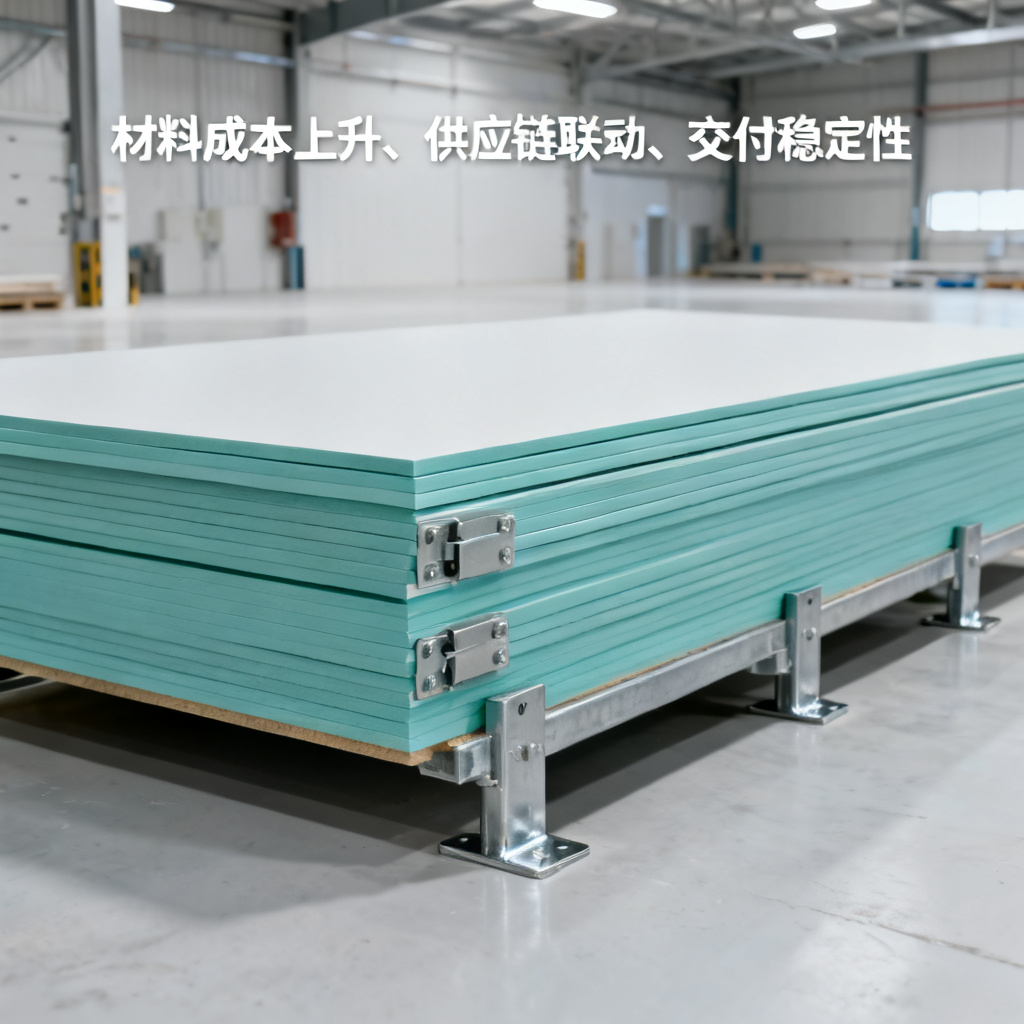
On August 15, 2026, the Trump administration in the United States announced that its 50% steel and aluminum tariffs would be extended to 407 derivative product codes containing steel or aluminum content. The move does not directly target pure PVC sheet products, but it matters for exporters, overseas buyers, and building-material supply chains tied to PVC composite boards, metal-clad decorative panels, and industrial sandwich panels, because higher costs for metal accessories and support components can feed into total project pricing and delivery stability.
What the August 15 measure covers
According to the information provided, the tariff expansion applies to 407 derivative product codes that contain steel or aluminum components. The covered scope includes auxiliary materials used in some PVC composite boards, metal-clad decorative panels, and industrial sandwich panels. The measure does not directly apply to pure PVC boards. However, the stated effect is that import costs for downstream metal fittings, connectors, and structural support parts may rise, which can in turn affect the overall cost and delivery consistency of complete building-material procurement packages for overseas customers.
Where the pressure may appear along the chain
Exporters selling system-based building material packages
From an industry perspective, companies that do not ship only standalone PVC sheets may face the clearest indirect exposure. When customers buy integrated solutions that include boards together with metal-linked accessories, joining parts, or structural supports, the landed cost discussion may shift from the PVC panel itself to the full package.
Manufacturers relying on accessory coordination
Analysis shows that manufacturers involved in composite boards, metal-clad decorative panels, or industrial sandwich panel applications may need to watch whether accessory sourcing becomes more expensive or less predictable. The impact is less about the resin-based panel alone and more about the supporting materials that influence final assembly, quoting, and delivery timing.
Overseas buyers focused on total procurement cost
For buyers, the key issue may be the total cost of a building-material solution rather than a single product line. If metal-related parts in a package face higher import costs, purchasing decisions may be delayed, repriced, or restructured even when pure PVC sheet products are not directly covered.
Supply chain and delivery service participants
Observably, logistics and supply-chain service providers should pay attention to whether cost transmission begins to affect order planning and lead-time expectations. The summary provided points specifically to delivery stability as an area of concern, which means contract scheduling and shipment coordination may require closer review.
What companies should watch now
Distinguish direct product exposure from bundled-solution exposure
What deserves closer attention is whether a business is exporting pure PVC sheets only, or whether it is involved in bundled solutions that include metal-dependent parts. The business impact may differ materially between those two cases.
Track official wording and scope interpretation
Companies should continue checking how the expanded tariff scope is described and applied in practice, especially where products use auxiliary materials connected to PVC composite boards, metal-clad decorative panels, or industrial sandwich panels. The policy signal and the operational effect may not be identical in every transaction scenario.
Review quotation structure and delivery commitments
Analysis shows that firms may need to separate panel pricing from accessory and support-part pricing more clearly in quotations and internal cost tracking. Delivery commitments also deserve review where imported connectors, fittings, or structural supports affect the completion of a full order.
Prepare customer and supplier documentation workflows
Where products involve multiple material categories, supplier qualification records, product descriptions, and trade documentation may become more important in explaining what is and is not directly affected. Clear communication with customers on cost pass-through and timing risks is likely to be more practical than broad statements about market conditions.
Why this looks more like a supply-chain signal than a single-product shock
In editorial observation, this development is better understood as an indirect cost and delivery signal rather than a confirmed direct restriction on pure PVC board exports. The information provided points to transmission through metal-related accessories, connectors, and support elements. That means the immediate industry question is not simply whether PVC sheets are covered, but how mixed-material solutions are priced, sourced, and delivered after the tariff expansion.
It is also more appropriate to understand this as a development that still requires observation. The announced measure is concrete, but the full business effect on orders, procurement behavior, and delivery arrangements will depend on how market participants adjust within affected supply chains.
How the market should read this development
The practical significance of this update lies in its indirect reach. It does not establish that pure PVC sheet trade is the direct target, yet it raises a credible concern for exporters and buyers operating around complete building-material solutions that depend on metal-related components. At this stage, the most balanced reading is that this is a short-term operational change with possible longer-term signaling value for supply-chain planning, and it should be monitored accordingly rather than overstated as an immediate across-the-board outcome.
Basis of this article and what still needs verification
This article is based on the user-provided news title, event date, and event summary. For developments of this type, commonly relevant source categories may include official government announcements, company disclosures, industry association updates, authoritative media reporting, and standards or classification-related documents. A specific official source link was not provided in the input, so further verification remains necessary. Continued attention should focus on any later clarification of product scope, implementation wording, and the practical effect on sourcing, quotation, and delivery arrangements.
Related Posts
- India delays BIS PVC import certification deadline to December 24, 2026Aug 17, 2026India delays BIS PVC import certification deadline to December 24, 2026. See how PVC sheets and profiles exporters can use the extra time to prepare compliance and avoid trade disruption.
- Brazil Extends Anti-Dumping Duty on Chinese PVC Resin for Five More YearsAug 17, 2026PVC resin anti-dumping duty in Brazil is extended to 2031, reshaping PVC board sourcing, compliance, and delivery strategy. Discover the key procurement risks and supplier shifts.
- China PVC Sheet Output Rises, Lead Times ShortenAug 14, 2026China PVC sheet output rises as lead times drop to 10-12 days, signaling faster delivery and stronger supply response for global buyers.
Get A Quote

First class quality service and professional after-sales team.
Get A Quote
*We respect your confidentiality and all information are protected.