
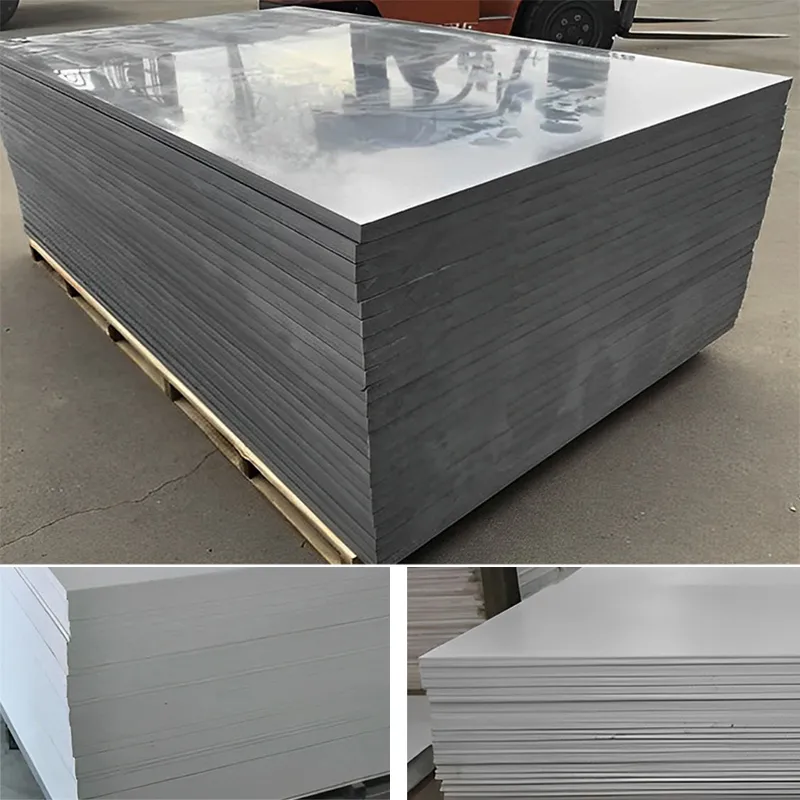
What Drives Rigid PVC Sheet Prices: Resin Costs, Specs, and Order Volume
Rigid PVC Sheet pricing often becomes confusing at the exact moment a buyer needs to move fast. A quotation may look reasonable at first, but once thickness, surface finish, tolerance, cutting, or packaging are clarified, the number changes. For purchasing teams comparing multiple suppliers, that creates a practical problem: it becomes hard to tell whether the price difference comes from the material itself or from details hidden in the specification.
This matters because Rigid PVC Sheet is rarely purchased as a generic item in real projects. It is usually tied to fabrication, display panels, industrial partitions, protective covers, chemical-resistant parts, or other end uses where dimensions and processing requirements affect cost. If you are trying to control budget without creating quality risk, the useful question is not simply “Who has the lowest price?” but “What exactly is driving this quote?”
Why price comparisons often go wrong
A common mistake in procurement is comparing quotes that look similar on paper but are not actually based on the same product conditions. One supplier may quote virgin material, another may include a mixed formulation, and a third may assume a different thickness tolerance. The sheet may still be described as rigid PVC, but the production input and inspection standard behind it can be different enough to move the final price.
Another issue is that many buyers receive an early number before all technical details are settled. Once flame performance, color consistency, UV resistance, masking film, CNC cutting, or drilling are added, the quote is revised. That does not always mean the supplier is being inconsistent. In many cases, the first quote was simply based on incomplete information.
When that happens late in the purchasing cycle, the result is delay, internal re-approval, and pressure on the production schedule. That is why understanding the main cost drivers is useful before asking for a final offer.
Resin cost is the first big driver behind Rigid PVC Sheet pricing
The base raw material has a direct impact on sheet pricing. PVC resin is usually the largest cost component in a solid rigid PVC sheet, so when resin market conditions change, sheet prices tend to move with them. Even when processing efficiency stays stable, the material cost alone can shift the final quotation.
Buyers sometimes expect prices to remain unchanged for long periods, especially if they are ordering the same dimensions repeatedly. In practice, that expectation can be unrealistic. Resin availability, additive cost, and upstream supply conditions all influence what a factory can offer at a given time.
This is one reason experienced buyers ask not only for a unit price but also for the validity period of the quote. If the supplier cannot hold a price for long, the procurement team should know that before internal approval starts.
Specifications can change cost more than many buyers expect
Thickness is one of the clearest pricing factors, but it is not the only one. Length, width, density, color, surface texture, gloss level, and dimensional tolerance can all affect production difficulty and yield. A standard white sheet in a routine thickness is usually easier to produce than a customized color or a sheet requiring stricter flatness and appearance control.
Surface requirements are especially easy to underestimate. If the sheet is intended for direct visual use, printed graphics, formed components, or CNC-machined parts, appearance consistency becomes more important. That can increase rejection standards in production and reduce usable output from each run.
Machining requirements also matter. A supplier with in-house turning, milling, and drilling capability can quote not just the sheet but also the processed part. That may raise the line-item price compared with raw sheet alone, but it can reduce handling steps and scrap risk on the buyer’s side. In some projects, it is more practical to buy a finished or semi-finished component than to source material and subcontract processing separately.
Order volume affects price, but not in a simple way
Most buyers know that larger orders usually get better pricing, but the reason is worth understanding. Volume improves production planning, material allocation, and packing efficiency. It can also reduce the cost impact of setup, color change, film application, inspection, and loading.
At the same time, “larger order” does not automatically mean “lowest possible unit price.” If an order includes many different sheet sizes, mixed colors, several thicknesses, or extensive machining steps, the operational complexity can offset part of the volume advantage. A smaller but more standardized order may sometimes receive a more competitive quote than a larger but fragmented one.
That is why buyers should look at the structure of the order, not just the total quantity. Consolidating specifications often improves price transparency more effectively than only pushing for a higher volume.
A practical checklist for evaluating supplier quotes
When several offers are on the table, it helps to review them in a fixed order instead of negotiating from the price line alone. A structured comparison makes it easier to identify where differences come from and whether the cheaper option is truly comparable.
- Confirm the material basis. Ask whether the quote is for solid rigid PVC sheet and whether any material grade assumptions have been made.
- Lock the dimensions and tolerances. Even small changes in thickness range or sheet size can affect material usage and production control.
- Check appearance requirements. Clarify color, surface finish, masking, and any visual acceptance standard.
- Separate raw sheet from processing. If cutting, drilling, or milling is needed, request that it be shown clearly so you can evaluate where the cost sits.
- Review packaging and shipment assumptions. Pallet style, protective film, export packing, and loading method can influence the total landed cost.
- Ask about quote validity. This is especially important when resin market conditions are moving.
This process is useful not just for rigid PVC procurement. Buyers who source fabricated polymer components across different applications often follow a similar approach. For example, if a project also includes supporting industrial items such as Small Outrigger Pads For Cherry Picker , the same logic applies: the real comparison depends on material, dimensions, processing, and quantity, not on a headline price alone.
Common pricing misunderstandings to avoid
One misunderstanding is assuming that the lowest ex-works figure always represents the best buying decision. If the quote leaves out film protection, machining, tighter tolerance, or export-ready packing, the buyer may end up paying more later through rework, freight inefficiency, or secondary processing.
Another common mistake is sending a broad inquiry such as “Please quote Rigid PVC Sheet” without defining the end use. Suppliers then have to make assumptions, and different assumptions create different prices. A better inquiry explains whether the sheet will be used for fabrication, printing, chemical contact, electrical insulation, structural covering, or visual display. The more complete the use context, the more realistic the quote.
It is also unhelpful to focus only on sheet price per kilogram or per piece without considering yield. For some applications, a slightly higher material price may be justified if the sheet performs better in machining, has more stable flatness, or reduces waste during cutting.
How to request a quote that is easier to approve internally
If your team needs fast supplier comparison and fewer revision rounds, build your RFQ around decision-ready details. Include material type, thickness, size, color, quantity, tolerance expectations, surface needs, processing requirements, and packaging preference. If the order may repeat, mention expected purchasing frequency as well.
For buyers working with manufacturers that offer both sheet production and deep processing, it can also help to request two versions of the quote: one for raw sheet and one for finished machining. That gives procurement, engineering, and operations a clearer basis for deciding where the work should be done.
Where customization is involved, small-batch support can be relevant too. It may not always produce the lowest unit cost, but it can reduce inventory pressure and help validate design assumptions before a larger production order is placed.
Frequently Asked Questions
Why does the same Rigid PVC Sheet thickness receive different quotes from different suppliers?
Because thickness alone does not define the product. Material formulation, tolerance control, surface quality, sheet size, color, masking, processing, and packing assumptions all influence the quote.
Should I ask for the lowest price first and discuss specifications later?
That usually creates confusion. A rough price can be useful for budgeting, but a purchasing decision should be based on a quote tied to clear specifications. Otherwise, later revisions are likely.
Does larger order volume always guarantee a better unit price?
Not always. Higher volume helps, but mixed specifications, custom colors, machining steps, and complex packing can reduce the pricing advantage that volume would otherwise create.
Is it worth asking one supplier to provide both sheet and machining?
In many cases, yes. It can simplify coordination and reduce the risk of dimensional mismatch between raw material and finished part requirements. The value depends on your internal processing capacity and quality control needs.
Can related industrial plastic products be evaluated the same way?
Yes. Whether you are sourcing sheet material or items like Small Outrigger Pads For Cherry Picker , the most reliable comparison comes from checking raw material basis, dimensions, processing scope, and order quantity together.
Final takeaway
Rigid PVC Sheet prices are driven by a combination of resin cost, detailed specifications, processing scope, and order structure. Buyers usually get better results when they stop treating the sheet as a simple commodity and start evaluating each quote against the real application. A clear RFQ, a consistent comparison checklist, and early attention to machining and packaging details can make pricing easier to understand and purchasing decisions easier to defend.
