
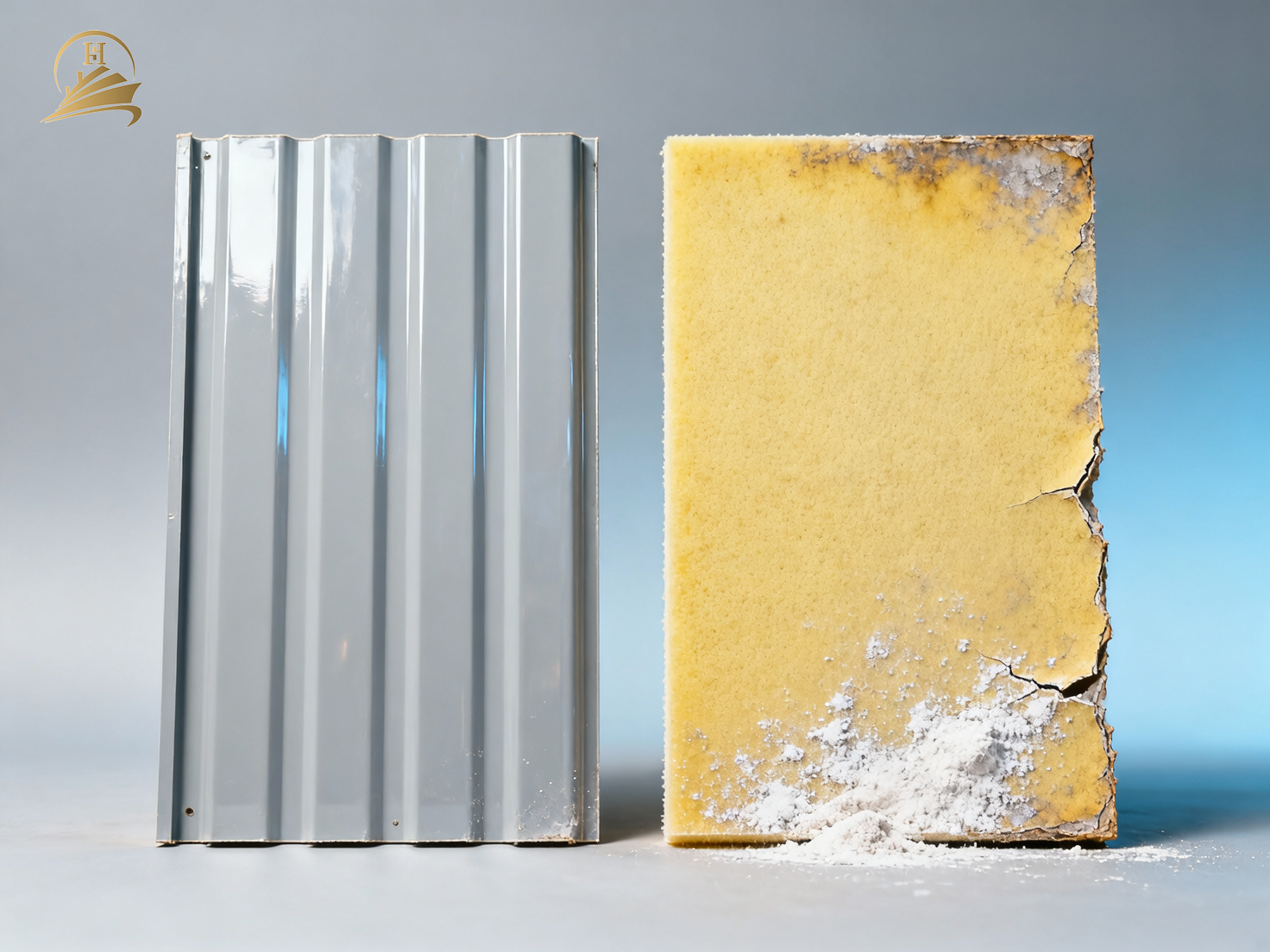
Choosing between hard PVC board and foamed PVC for outdoor applications? UV resistance is a critical factor—especially for PVC wall panels, acrylic sheets, and HDPE boards used in signage, cladding, or architectural projects. At Jinan Huayu International Trade Co., Ltd., a leading Chinese manufacturer of plastic sheets since 2008, we rigorously test both hard PVC board and foamed PVC under real-world UV exposure. This article compares their long-term weatherability, color stability, and surface integrity—helping information seekers, engineers, project managers, and distributors make data-driven material decisions.
How UV Exposure Impacts PVC Structure & Surface Integrity
UV radiation triggers photo-oxidation in PVC, breaking down polymer chains and depleting stabilizers. Hard PVC board contains higher chlorine content (56–57%) and denser molecular packing, offering inherently greater UV shielding per unit thickness. Foamed PVC relies on closed-cell microstructure and added UV absorbers (e.g., benzotriazoles) to delay degradation—but its lower density (~0.5–0.7 g/cm³ vs. 1.3–1.45 g/cm³ for solid) increases surface-area-to-volume ratio, accelerating initial photodegradation.
Accelerated weathering tests (ASTM G154 Cycle 1, 340 nm UV-B, 60°C black panel, 4h UV/4h condensation) show hard PVC retains ≥92% tensile strength after 2,000 hours. Foamed PVC typically retains only 75–82% over the same period—particularly at edges and cut surfaces where cell structure is compromised.
Surface chalking, yellowing, and microcracking begin earlier in foamed PVC: visible changes often appear within 6–12 months in subtropical zones (e.g., Guangdong, Florida), while hard PVC shows minimal change for 3–5 years under identical conditions.
Direct Performance Comparison: Hard PVC vs. Foamed PVC Under UV Stress
The table below summarizes key UV-related performance metrics based on 3-year field exposure data from Jinan Huayu’s outdoor test site in Qingdao (latitude 36°N, annual UV index avg. 5.8, 2,300+ sunshine hours/year):
These results reflect standardized formulations: hard PVC uses calcium-zinc stabilizers + HALS + UV absorber package; foamed PVC uses similar additives but with reduced loading due to thermal sensitivity during foaming. The gap widens significantly when panels are installed without backing support or exposed to reflective surfaces (e.g., white roofs, water).
Which Applications Demand Hard PVC’s UV Resilience?
Hard PVC board is strongly recommended for applications requiring >3-year service life without maintenance:
- Architectural cladding in coastal or high-UV regions (e.g., UAE, Australia, Southern Europe) — where salt + UV synergy accelerates degradation.
- Permanent signage (roadway, transit, safety) certified to EN 12899-1 or ASTM D4956 Class I — requiring ≤2.0 ΔE after 36 months.
- Exterior fascia and soffits in commercial buildings — subject to continuous sun exposure and thermal cycling (−10°C to +65°C).
- Backlit channel letters and illuminated displays — where internal heat buildup compounds UV stress.
Foamed PVC remains viable for short-term indoor/outdoor hybrid use: trade show booths (<12 months), temporary wayfinding (≤18 months), or interior signage with limited daylight exposure.
Why Choose Jinan Huayu for UV-Resistant PVC Sheets?
Since 2008, Jinan Huayu has delivered UV-optimized PVC sheets to 47 countries. Our factory in Jinan operates dedicated weathering labs (QUV, Xenon arc, natural exposure racks) and follows ISO 9001:2015-controlled formulation protocols. Every hard PVC batch undergoes mandatory UV screening: 500-hour QUV pre-shipment testing plus full spectral reflectance verification (280–400 nm range).
We offer three UV-enhanced grades: Standard (3-year warranty), Premium (5-year warranty, enhanced HALS + nano-TiO₂), and Custom (formulated per client-specified ASTM D4329 or ISO 4892-3 cycles). Lead time: 7–12 working days for standard orders; custom UV validation adds 3–5 days.
Contact us today for: UV performance datasheets, third-party test reports (SGS, TÜV), sample kits with accelerated aging logs, or engineering support for your specific exposure profile (altitude, latitude, orientation, substrate reflectivity).
Related Posts
- India delays BIS PVC import certification deadline to December 24, 2026Aug 17, 2026India delays BIS PVC import certification deadline to December 24, 2026. See how PVC sheets and profiles exporters can use the extra time to prepare compliance and avoid trade disruption.
- Brazil Extends Anti-Dumping Duty on Chinese PVC Resin for Five More YearsAug 17, 2026PVC resin anti-dumping duty in Brazil is extended to 2031, reshaping PVC board sourcing, compliance, and delivery strategy. Discover the key procurement risks and supplier shifts.
- China PVC Sheet Output Rises, Lead Times ShortenAug 14, 2026China PVC sheet output rises as lead times drop to 10-12 days, signaling faster delivery and stronger supply response for global buyers.
Get A Quote

First class quality service and professional after-sales team.
Get A Quote
*We respect your confidentiality and all information are protected.